How Shared Abundance works
Everyone is welcome
SA should ultimately be open to every human being, regardless of nationality, wealth, education, employment, religion, politics or social status.
The long-term principle is extremely simple:
Someone cannot purchase additional shares. Being a founder doesn’t provide a permanently bigger share. Contributing more money doesn’t give someone more permanent ownership.
The wealth comes from real businesses
SA does not need its own currency. Its purpose is not to create tokens and persuade people to accept them.
Instead, SA creates or owns real productive assets. For example:
- AI software companies
- automated online services
- autonomous marketplaces
- AI-operated design or engineering businesses
- robotic manufacturing
- automated agriculture
- energy production
- eventually almost anything machines can economically produce.
Those businesses sell things in the ordinary economy. An American operation might earn dollars. A European one might earn euros.
Surplus is shared. After legitimate costs, reserves, reinvestment and obligations, the money left to share goes equally to members.
That makes SA fundamentally a production system, rather than a new monetary system.
Start with one viable business
We don’t begin by attempting to replace the world economy. We prove one tiny piece.
Humans and AI build an online business. AI gradually performs almost everything required to operate it: software development, customer support, marketing, accounting preparation, optimization, administration and potentially management.
Humans initially do whatever AI cannot reliably do.
Human labor is a bridge, not the ultimate source of SA’s wealth.
Suppose eventually that business costs $100,000 per month to operate and generates $150,000. It has produced $50,000 of surplus.
Instead of that $50,000 permanently belonging to private shareholders, it ultimately belongs to Shared Abundance.
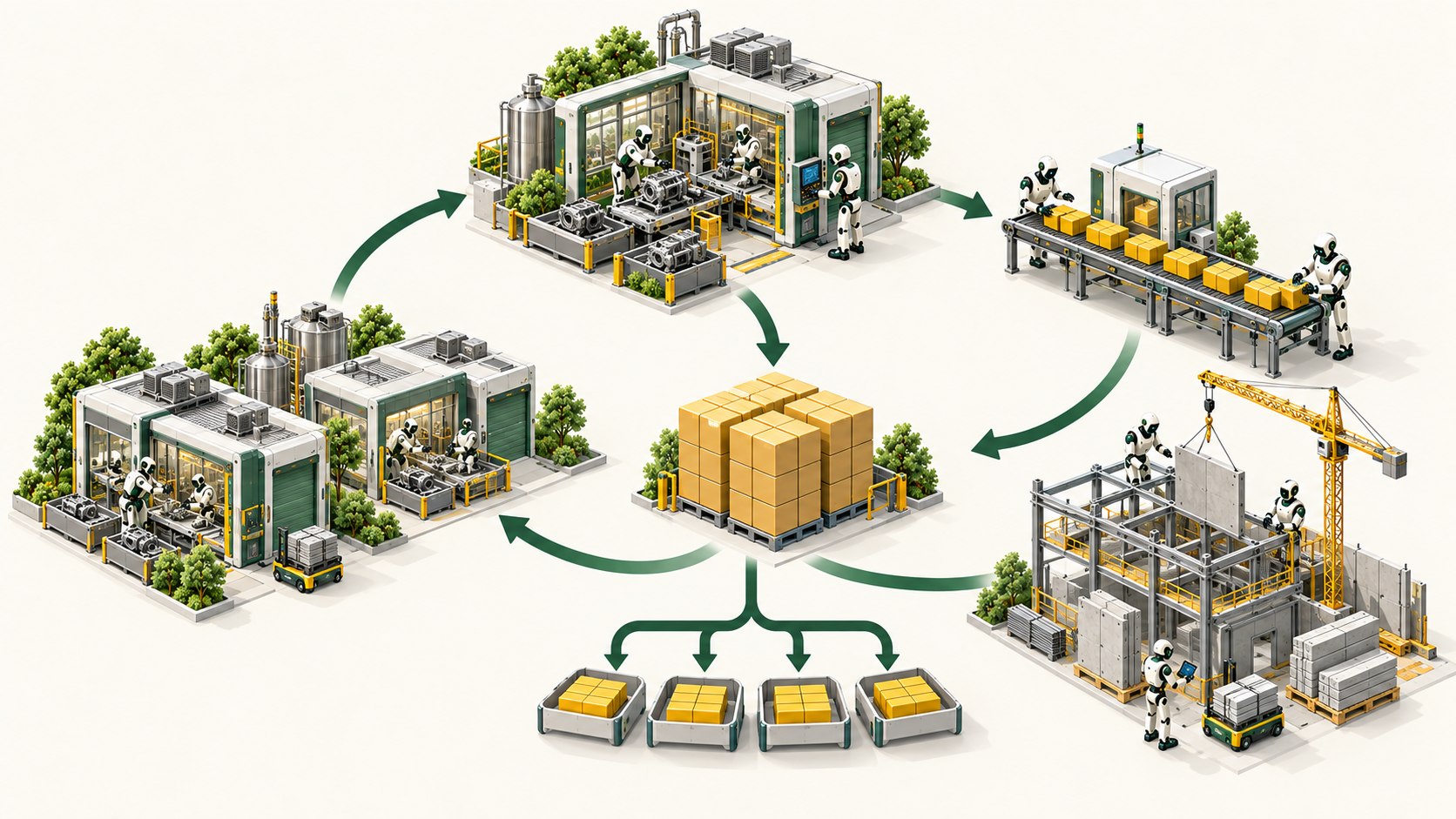
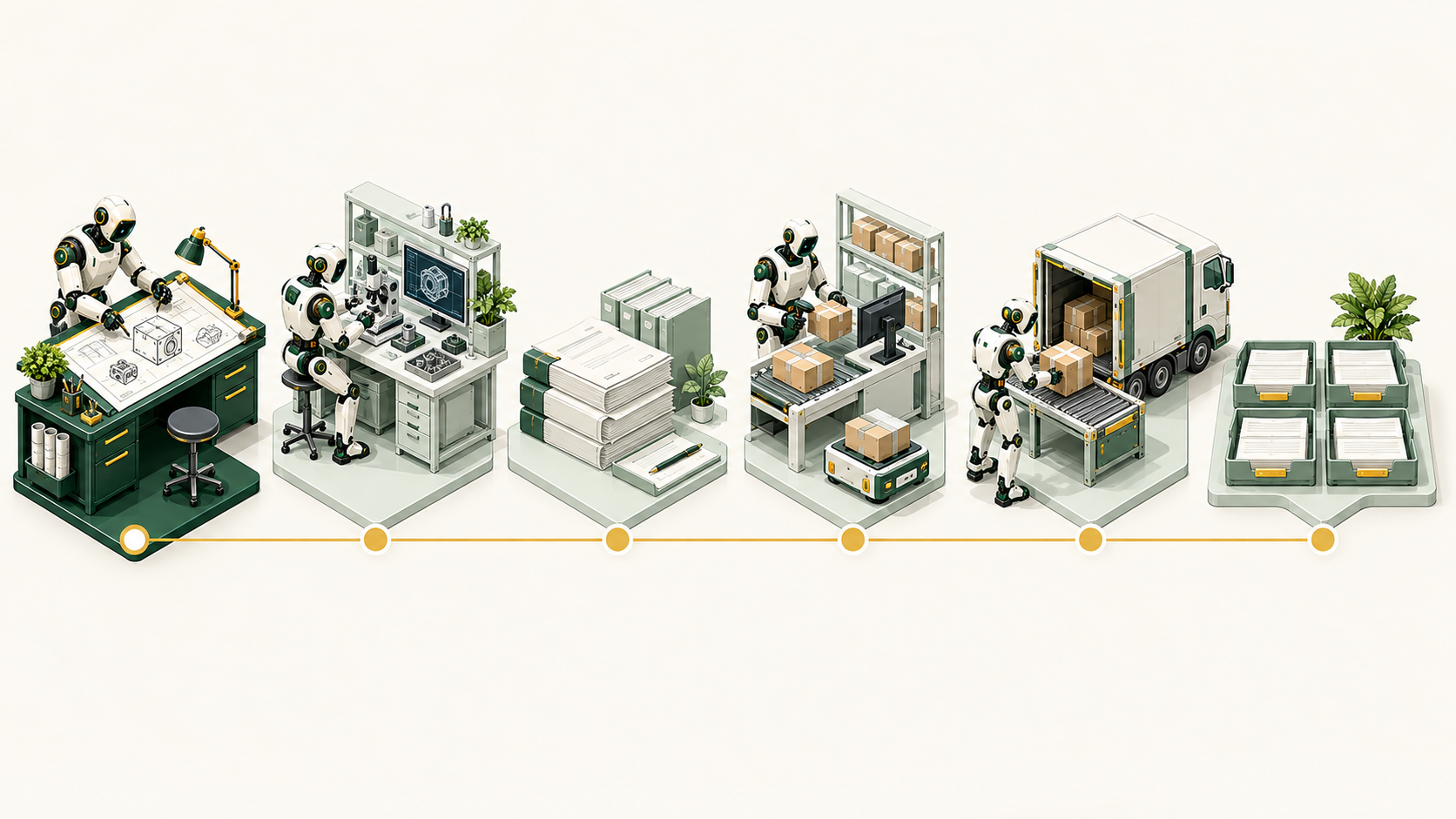
Now SA uses some of that money to create Business 002. Then 003. Eventually perhaps there are thousands or millions of separate businesses that run on their own.
This produces a flywheel:

Pioneers help it get started
There is an obvious chicken-and-egg problem: The commons can’t own productive AI businesses until somebody builds them. And building them initially requires money and human effort.
So SA begins with Pioneers.
Pioneers might contribute through: subscriptions, donations, investment, engineering, AI compute, equipment, professional services, research or direct work.
Initially SA might receive money from: memberships or subscriptions, crowdfunding, philanthropists, foundations, grants, aligned investors and revenue from early SA companies. Funding should become increasingly diverse.
During this early period, pioneers can receive benefits because they’re taking the initial risk. For example, someone might contribute $10,000 to establish the first business and receive an agreed portion of early profits.
Early advantage must expire.
A pioneer may receive a defined financial return while SA is being established. They do not acquire permanent ownership over humanity’s future automated economy.
The trigger could be mathematically defined. For example, special pioneer returns end once SA’s businesses generate enough recurring surplus to cover their operations and finance continued expansion without new pioneer capital.
At that point SA has become self-sustaining. The training wheels come off.
That moment is an important milestone: Economic independence.
People can contribute without becoming rulers
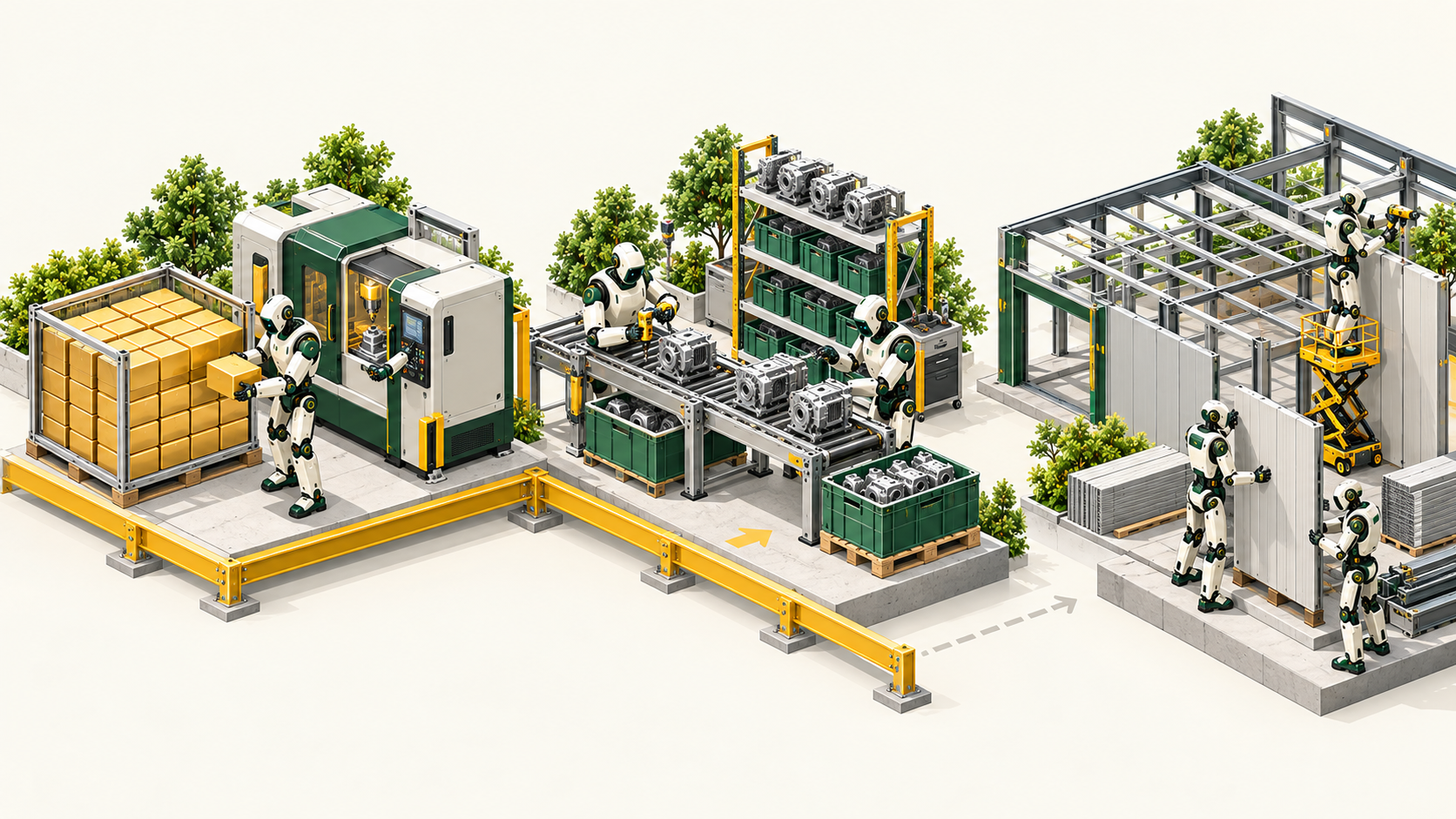
During the transition, SA needs people.
- Programmers can write code.
- Lawyers can help develop structures.
- Economists can model distribution.
- Designers can make SA understandable.
- Ordinary members can identify problems.
- Entrepreneurs can propose businesses.
People can contribute tiny amounts or enormous amounts. But contribution should not gradually transform into hereditary power.
Contribution can earn temporary compensation and permanent recognition. It should not buy permanent superiority.
The people who create SA deserve recognition. Their names can be permanently recorded. There could be a Founders Register, Pioneer Number, history, honors or other recognition.
Someone might proudly say: “I was one of the first 1,000 people who built Shared Abundance.”
But that historical contribution doesn’t entitle them to receive more than what a child born 50 years later receives.
OG status: yes.
Permanent financial privilege: no.
That distinction is crucial because otherwise SA eventually becomes another system in which early ownership compounds indefinitely.
No permanent ruling class. Founders, programmers, investors, AI providers, administrators and later generations all remain subordinate to the commons.
SA belongs to the future as much as the founders. No generation should be able to permanently sell humanity’s claim on the productive commons.
The transition to Universal High Income
SA doesn’t promise everyone a high income immediately. Initially the commons might produce almost nothing.
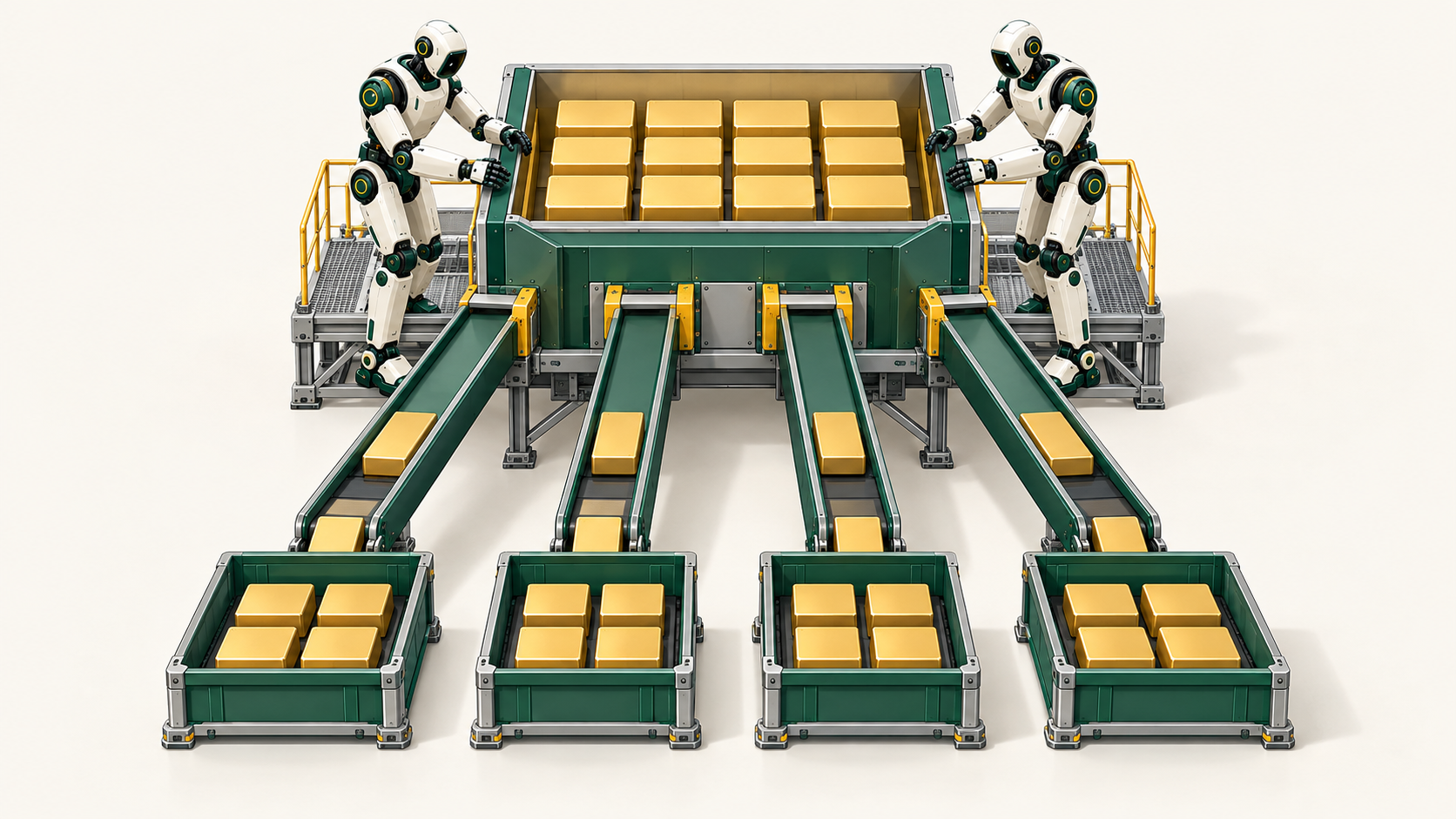
Then perhaps enough to distribute $1 per person. Then $10. Then $100.
The amount increases only as the productive capacity of the commons increases. This means there doesn’t necessarily have to be a politically determined definition of “high income.”
The fundamental formula looks like this:
As automation becomes dramatically more productive, the amount could potentially rise far beyond subsistence.
That’s the path from:
- no dividend
- small shared income
- meaningful income
- universal high income
AI does the everyday work; humans set the rules
If millions or billions of people have to vote constantly on investments, salaries, businesses, infrastructure and operational decisions, SA could become an enormous bureaucracy.
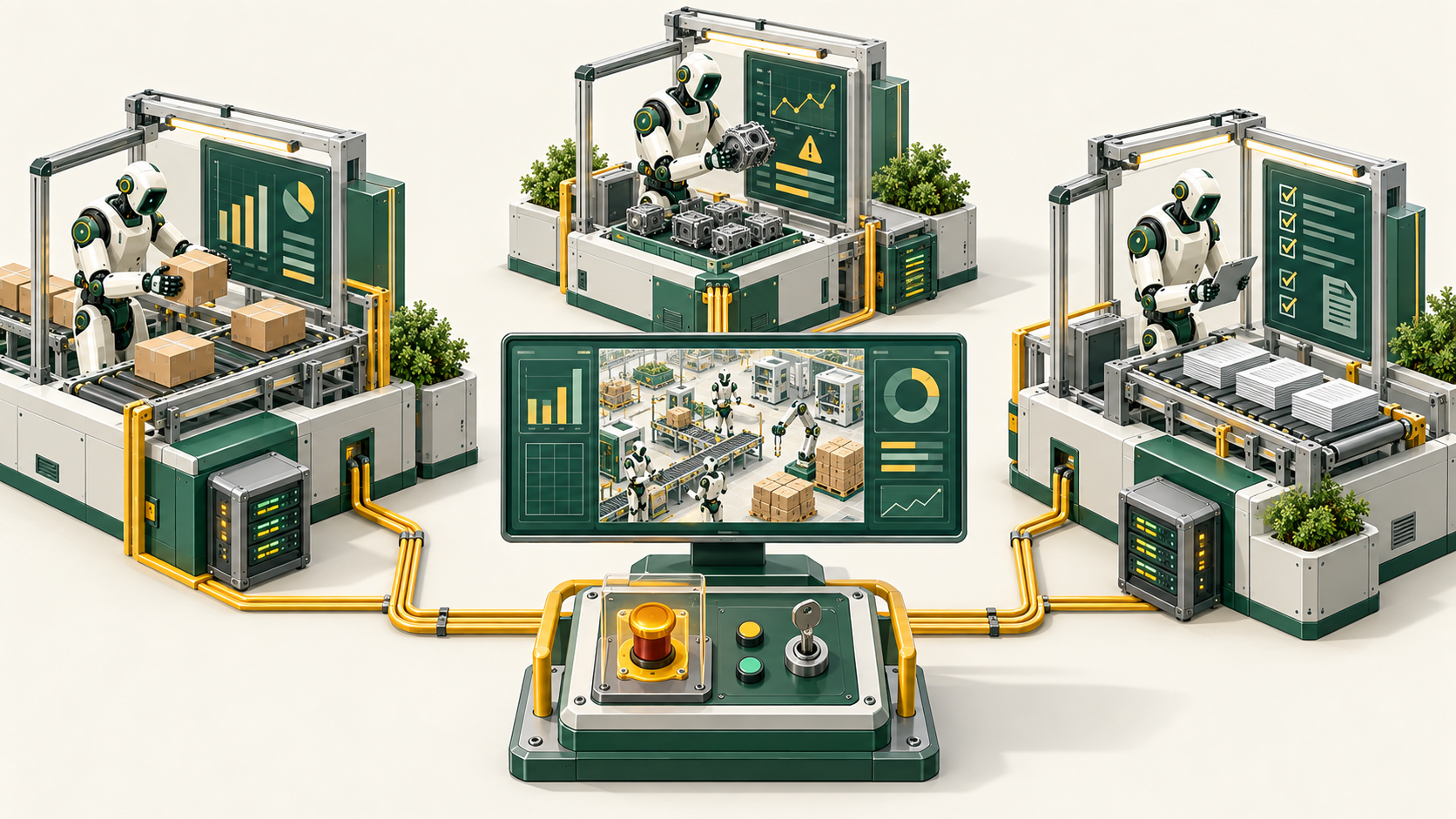
AI operates. Humans retain ultimate authority.
AI manages routine operations wherever safely practical.
AI can eventually handle ordinary decisions like: which businesses to establish, capital allocation, operational optimization, procurement, maintenance, fraud detection, accounting, risk management and reinvestment.
Humans don’t need to vote every Tuesday on which server provider Business 18,427 should use. The machines should handle ordinary management.
Human authority sits above the operational AI. People establish a small number of fundamental rules that the AI cannot rewrite itself.
- Every verified human is fundamentally equal.
- No person may purchase a permanently bigger share.
- Nobody can buy control. Money, tokens or investment cannot purchase permanent constitutional authority.
- Shared assets cannot secretly become private property.
- Distribution rules must be public.
- The system’s finances must be independently verifiable.
- AI cannot alter the constitution governing itself.
- Humans retain an emergency mechanism for stopping or overriding the system.
People therefore aren’t managing SA every day. They’re protecting its purpose.
Multiple AIs will watch one another
SA shouldn’t ultimately depend on one “benevolent super-AI.”
Instead, important decisions could be independently examined by multiple systems.
- Management AI: proposes an investment.
- Risk AI: evaluates whether it threatens SA.
- Audit AI: verifies the numbers.
- Constitution AI: tests the action against SA’s rules.
- Public audit system: records the decision and reasoning in an understandable form.
The systems don’t all need to be supplied by the same organization or use the same model. This provides technological checks and balances.
Humans remain the final stop if something goes wrong.
Work within the existing economy
SA doesn’t need to become a country. It doesn’t need an army. It doesn’t need sovereign territory. It doesn’t need to eliminate national currencies.
And it doesn’t inherently need to avoid taxation. Its companies can operate under the laws of the countries in which they operate. They can pay tax like other businesses. People receiving distributions can comply with applicable tax rules.
Governments continue doing the things governments do. SA has a much narrower objective: change who ultimately receive the productive wealth created by automation.
That potentially makes the transition considerably less confrontational than attempting to replace states or national currencies.
SA also doesn’t inherently require confiscating existing fortunes or businesses. Someone who owns a conventional company can continue owning it. SA simply starts building an alternative pool of productive assets that everyone shares equally.
Over decades, if automated production proves highly competitive, its share of economic production could grow organically. So the transition can potentially happen through building something new rather than taking something old. That’s strategically important.
SA can operate inside markets. Its companies can compete. Customers can choose whether to buy their products. Prices can exist. Entrepreneurship can exist. Private companies can continue existing.
Keep the system open and understandable
If ordinary people cannot understand how SA works, SA has been designed badly.
Its constitution, website, finances and distribution system should therefore have plain-language versions.
And membership should never require somebody to understand economics, AI or complicated legal terminology.
There can be sophisticated mathematics and engineering underneath it, but complexity should never become a mechanism through which an expert class acquires control.
Blender is a good example. Blender isn’t merely free software. People around the world can inspect it, improve it and contribute to it. SA applies that philosophy not simply to a program, but to an economic system.
Where security and personal privacy permit, SA should publish things such as: its constitution, economic model, governance rules, software, proposals, decisions, financial statements, audit mechanisms, AI decision protocols, research and lessons from failed experiments.
Rules, finances, ownership, changes and major decisions should be inspectable.
Changes should have public histories.
People should be able to see: What changed? Who proposed it? Why did it change? What did the AI recommend? What happened afterward?
Political neutrality
Shared Abundance is neither a left-wing nor a right-wing project. It is not communism or socialism. It is independent of political parties and does not require anyone to adopt a political ideology. Its purpose is practical: build productive AI businesses and share the resulting surplus under transparent, equal rules.
People should be able to participate while keeping their own political, religious and cultural beliefs. Membership, voice and entitlement to distributions must never depend on political allegiance. SA’s resources must never be used to promote political parties or candidates.
This is our opportunity to work together for the good of all mankind.
Develop it through small, public tests
Eg: “Here is version 0.1. Help us find what’s wrong with it.”
SA itself should be developed by AI, almost like open-source software.
- Version 0.1: idea.
- Version 0.2: community criticism.
- Version 0.3: economic simulations.
- Version 0.4: legal framework.
- Version 0.5: first pioneer-funded AI business.
- Version 0.6: first actual revenue.
- Version 0.7: first distribution.
- Version 0.8: first business created entirely from SA surplus.
Nothing about the economic model should be treated as sacred, except perhaps the handful of constitutional principles necessary to preserve the project’s purpose.
Questions we still need to answer
There are obviously difficult practical questions around identity verification, sanctions, financial regulation, tax, minors and jurisdictions. Those are implementation problems that would need proper legal solutions.
Help build the next step
Contribute skills, review the rules, or follow progress as Shared Abundance moves from published principles into practice.